The Posterior Occipital-Cervical-Thoracic Spinal System is designed for posterior spinal fixation and fusion from the occiput through the thoracic spine.
The system includes polyaxial screws, titanium rods, crosslinks, lateral connectors, axial and domino connectors, occipital screws, occipital plates, lamina hooks, and locking set screws. All components are made from TC4 titanium alloy.
Through a posterior approach, polyaxial screws are inserted into the vertebral pedicles and connected with pre-contoured or adjustable titanium rods. The system provides a three-dimensional fixation construct to support realignment, stabilization, and fusion of the occipital, cervical, and thoracic spine.
• Supports decompression, reduction, fixation, and fusion across the occipital, cervical, and thoracic spine.
• Provides resistance to axial pullout, bending, and rotational forces.
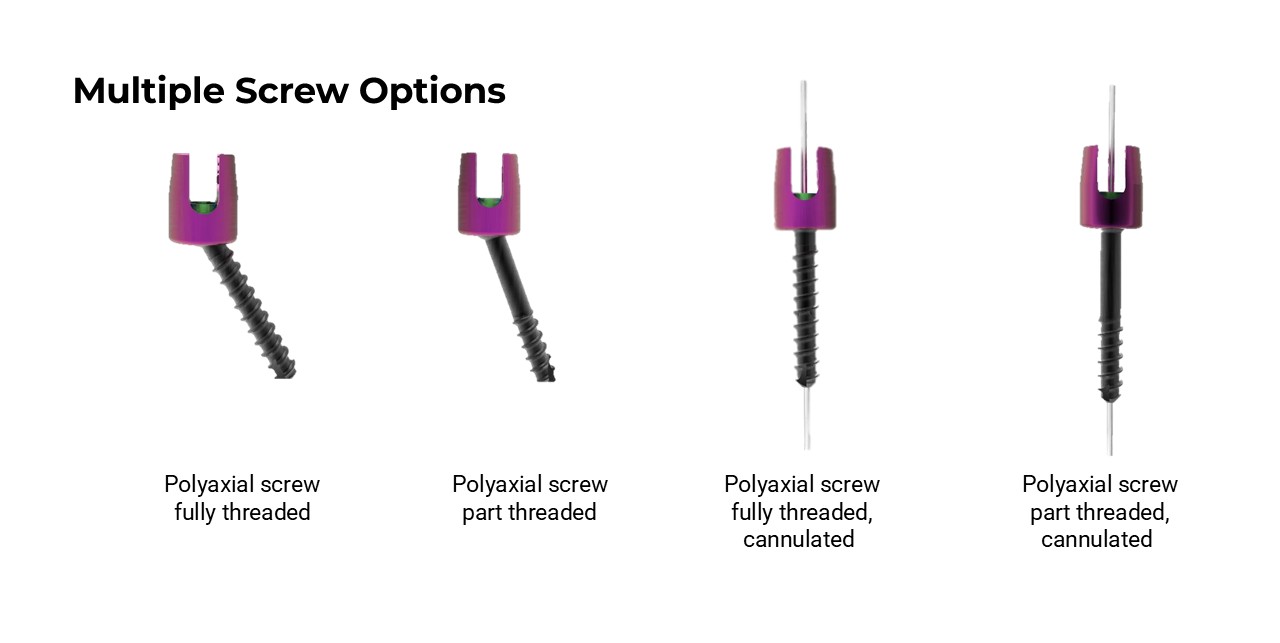
• Available in fully threaded, partially threaded, hollow fully threaded, hollow partially threaded, and standard configurations.
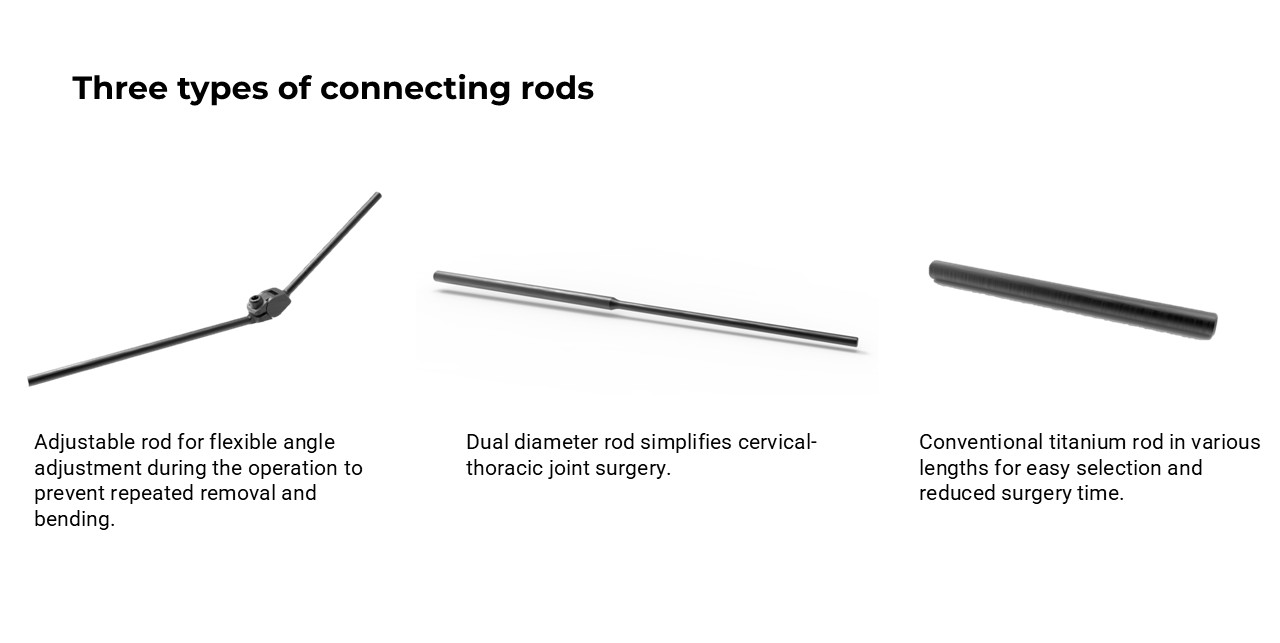
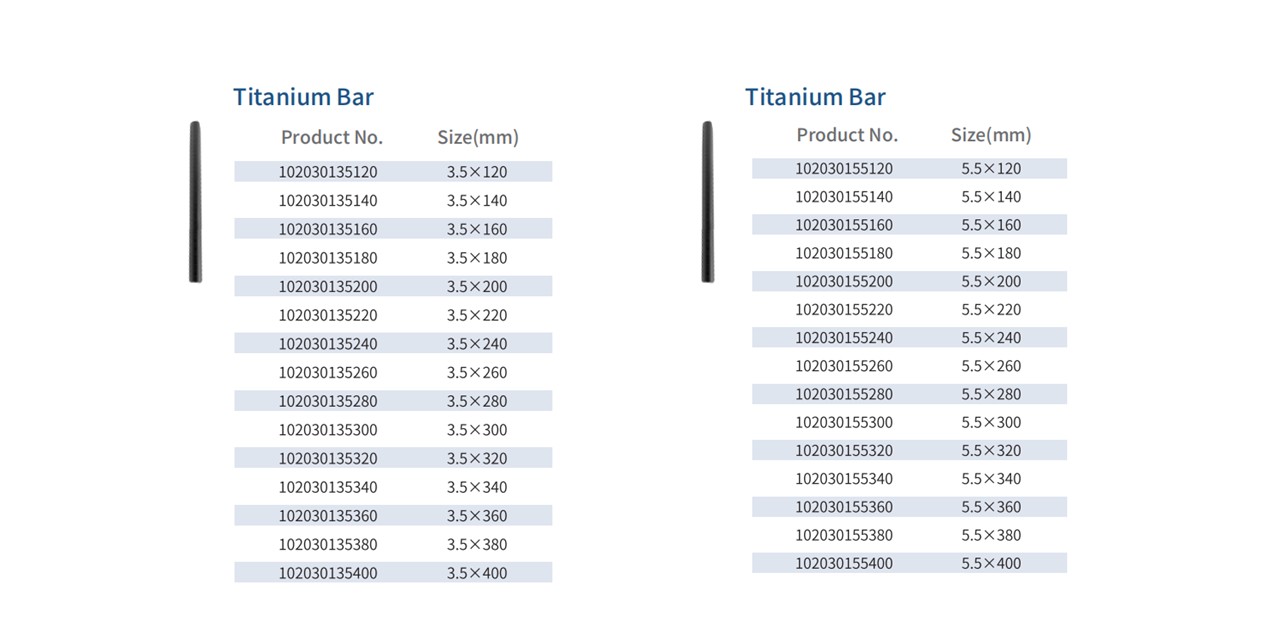
• Standard rods for cervical fixation.
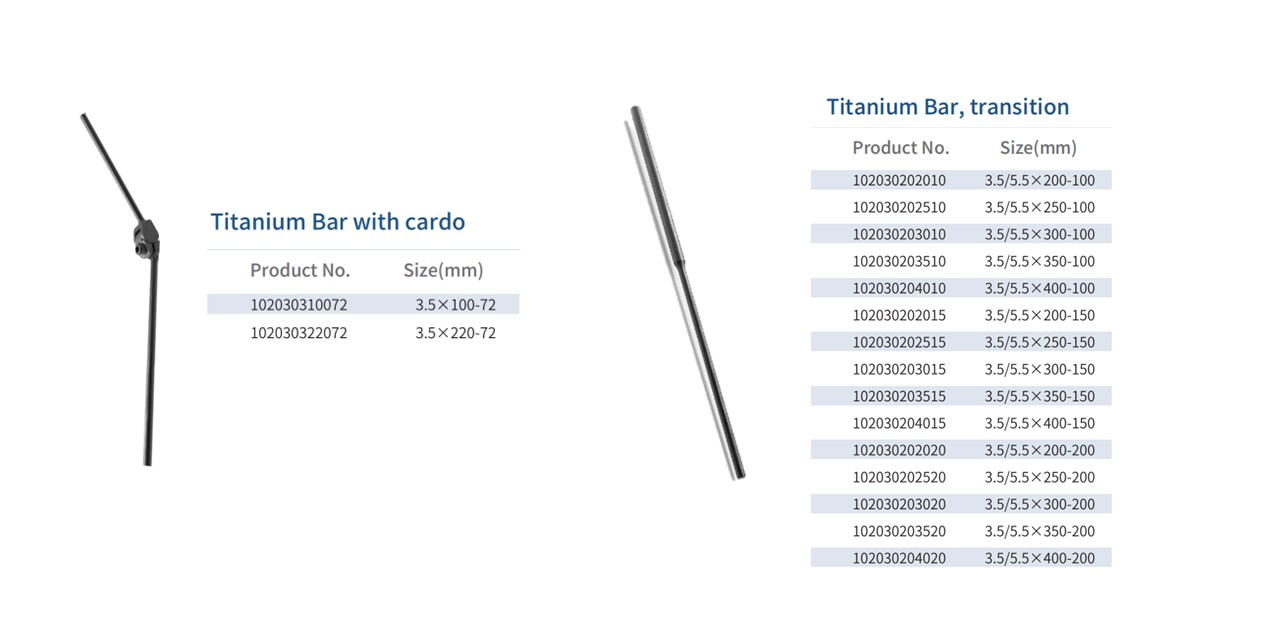
• Dual-diameter rods for cervical-to-thoracic fixation.
• Adjustable rods with hinged joints to simplify occipito-cervical fixation and reduce in-situ rod contouring.
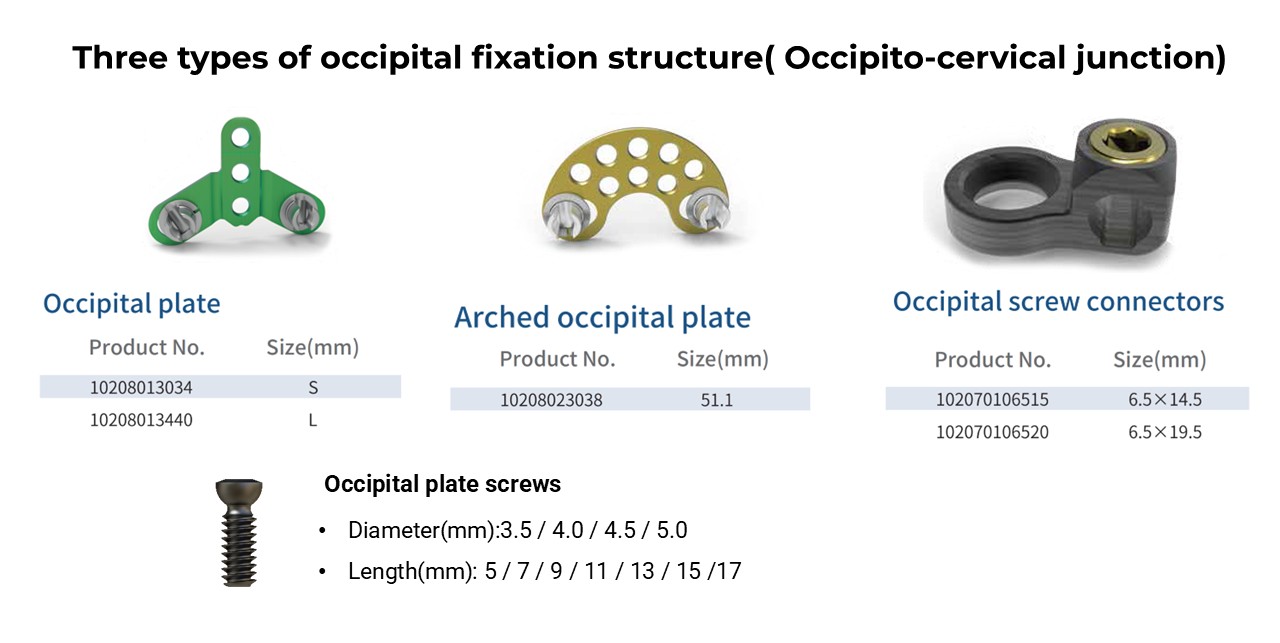
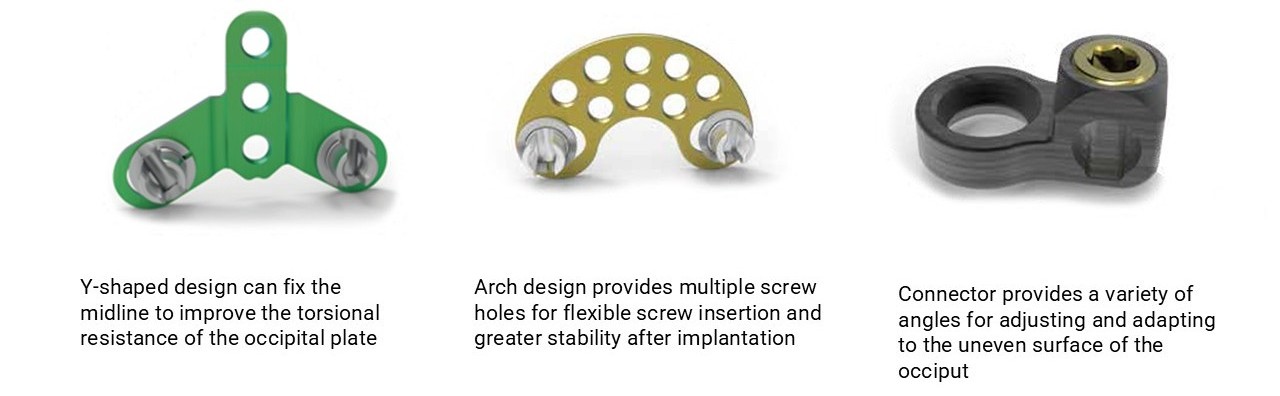
• Y-shaped occipital plate for midline screw fixation.
• Arched occipital plate with multiple screw holes for flexible fixation.
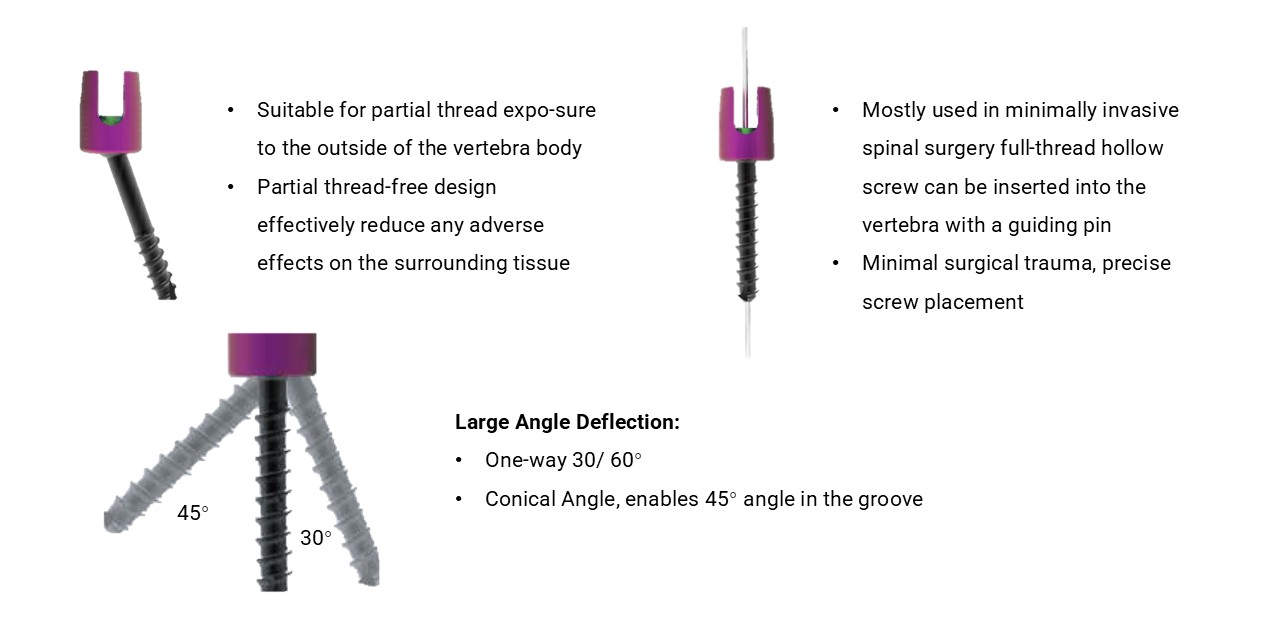
• Screws provide up to 60° conical angulation.
• Rod saddles allow up to 45° angulation per side for greater intraoperative flexibility.
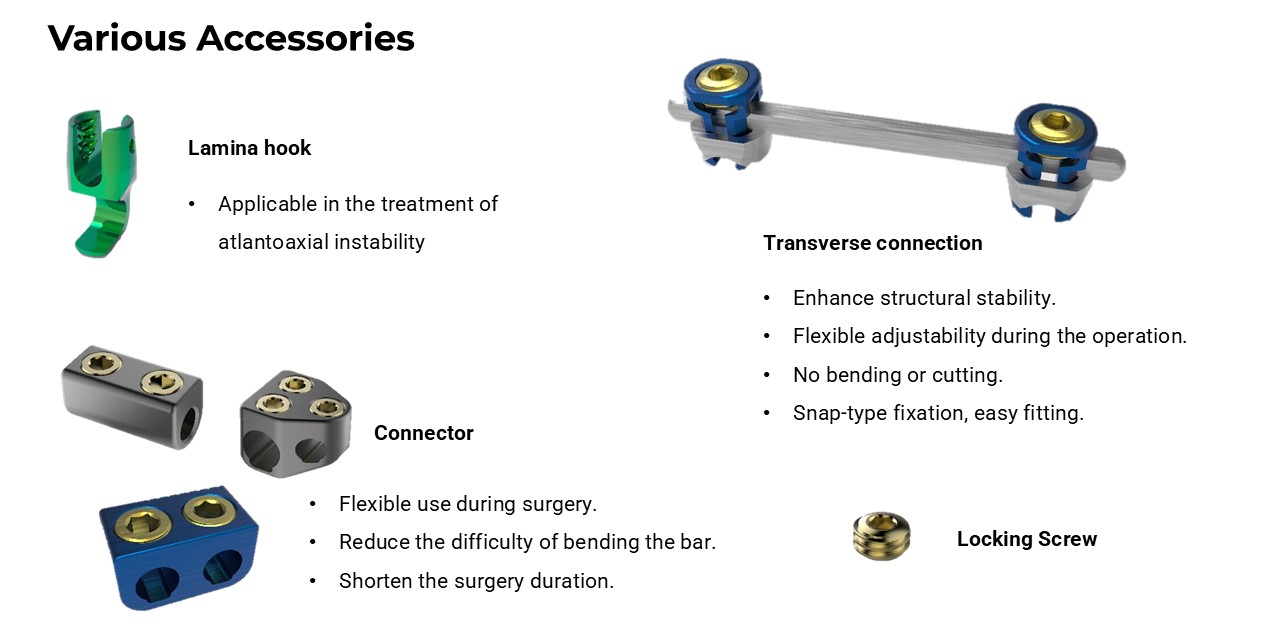
• Crosslinks, domino connectors, lamina hooks, and lateral connectors support customized fixation configurations.
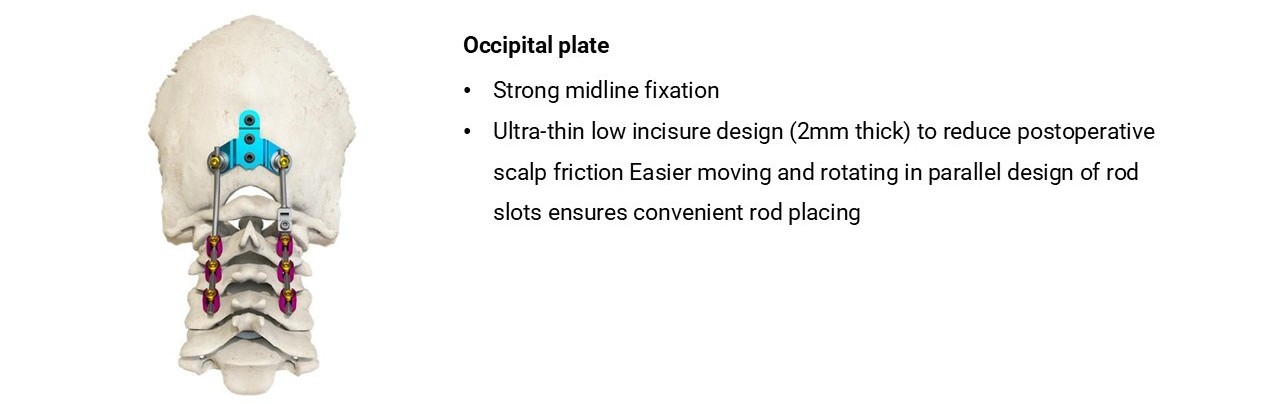
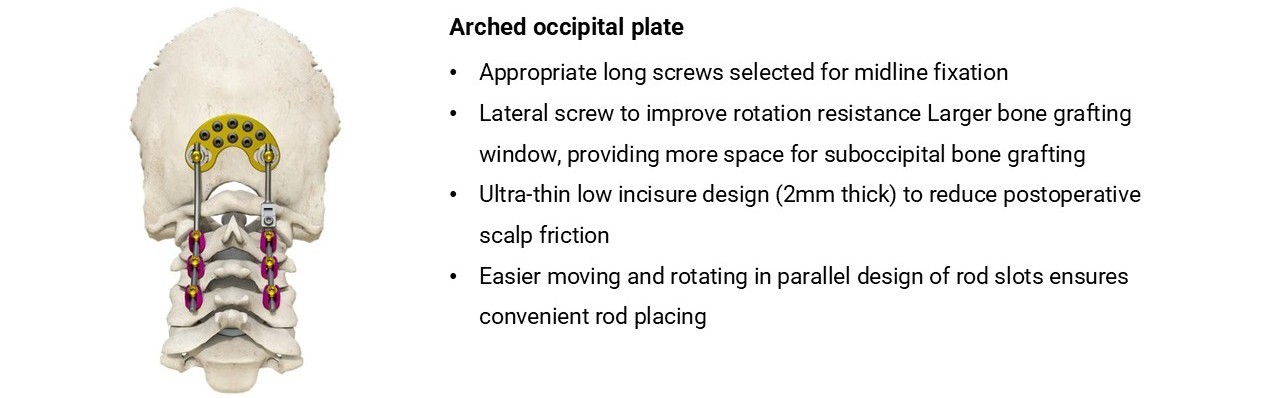
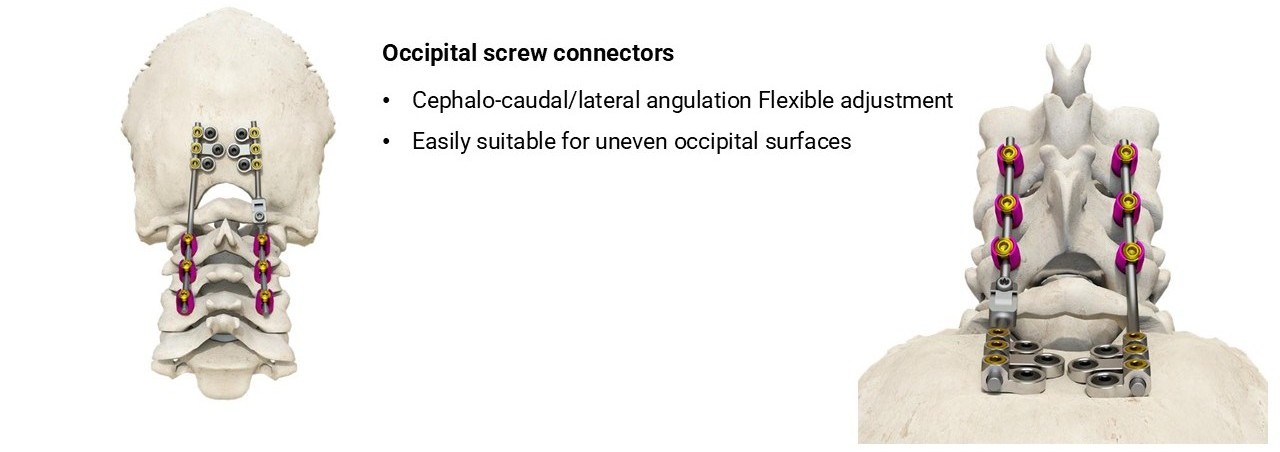
• Versatile Coverage: Supports posterior fixation from the occiput to the upper thoracic spine.
• Multiple Fixation Options: Provides different occipital fixation configurations and rod options for various surgical requirements.
• Wide Screw Selection: Solid and cannulated screws with full or partial threads are available, with up to 60° of angular adjustment.
• Comprehensive Accessories: Crosslinks, domino connectors, lamina hooks, and lateral connectors support different construct configurations.
• Strong Stability: Provides three-dimensional stabilization and supports sagittal and coronal alignment during fusion.
• Simplified Surgical Workflow: Adjustable rods can reduce intraoperative rod bending and simplify the fixation procedure.
The system is indicated for posterior internal fixation and fusion of the occipital, cervical, and cervicothoracic spine in patients with:
• Degenerative Disc Disease
• Spinal Canal Stenosis
• Cervical Instability or Spondylolisthesis
• Trauma
• Spinal Deformity
• Tumors
• Infections, such as Spinal Tuberculosis
• Revision Surgery Following Failed Fusion