The Cervical Fusion Cage (Insert-Type) is a stand-alone PEEK interbody implant developed for anterior cervical fusion procedures.
The system consists of a hollow PEEK cage incorporating pure tantalum radiopaque markers and two titanium alloy anchoring clips. Positioned between adjacent cervical vertebral bodies, the insert-type fixation mechanism uses a distraction-compression stabilization concept in which the cage restores the intervertebral space while the clips engage the adjacent vertebral endplates.
The clip fixation is designed to provide resistance to rotational and shear forces, supporting immediate segmental stability after implantation. The internal graft chamber provides substantial space for bone graft material to support the fusion process while helping restore disc height and cervical lordotic alignment.
The PEEK material has an elastic modulus closer to that of bone, helping provide a more bone-compatible mechanical environment. Integrated tantalum markers provide clear radiographic reference points for implant positioning and postoperative evaluation.
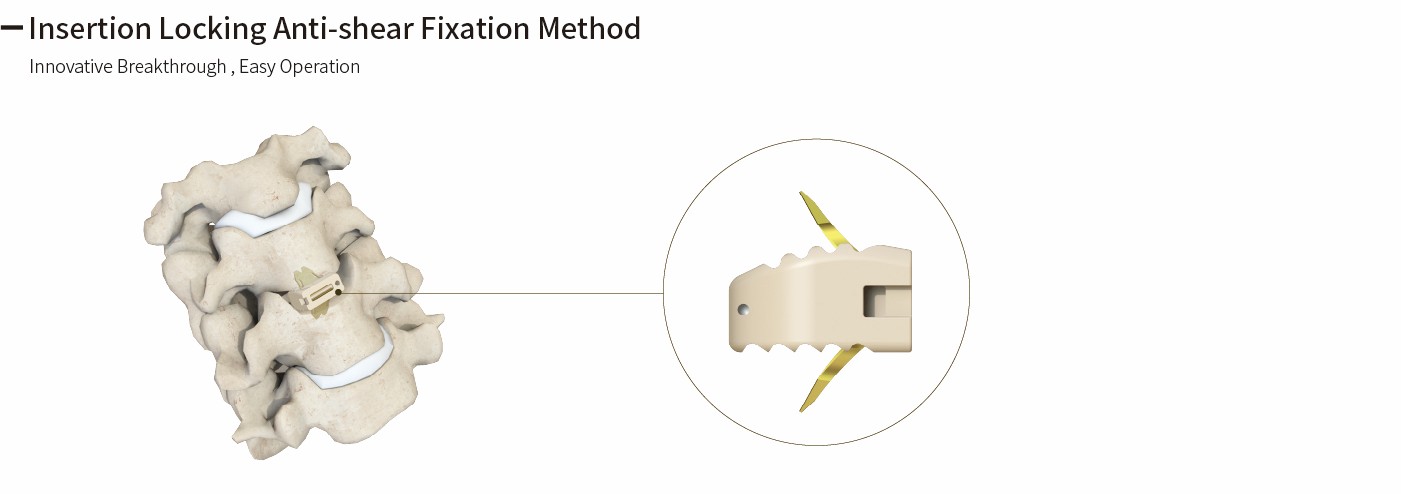
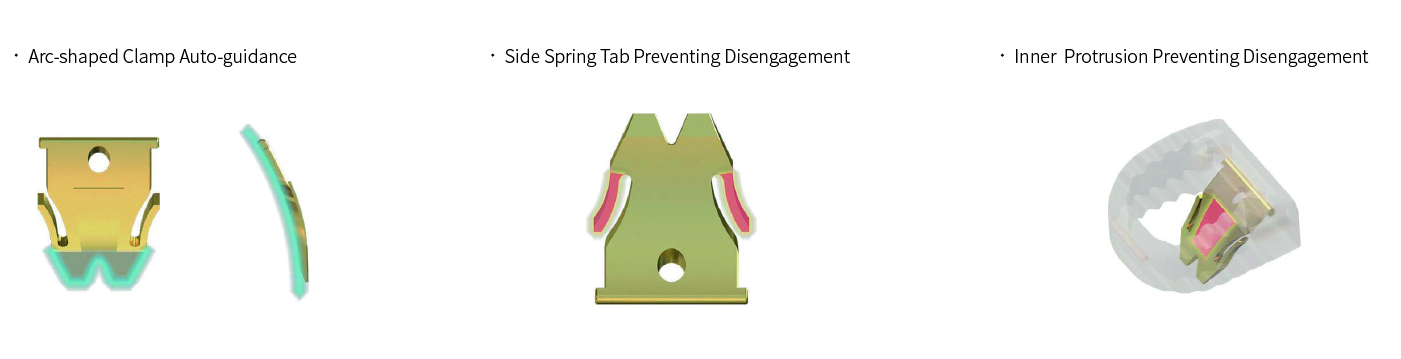
• Self-locking titanium alloy clips engage the adjacent vertebral endplates and secure the cage in position.
• The fixation configuration is designed to resist rotational and shear forces and provide immediate postoperative segmental stability.
• The hollow cage provides ample internal space for bone graft material, supporting bone fusion across the treated segment.
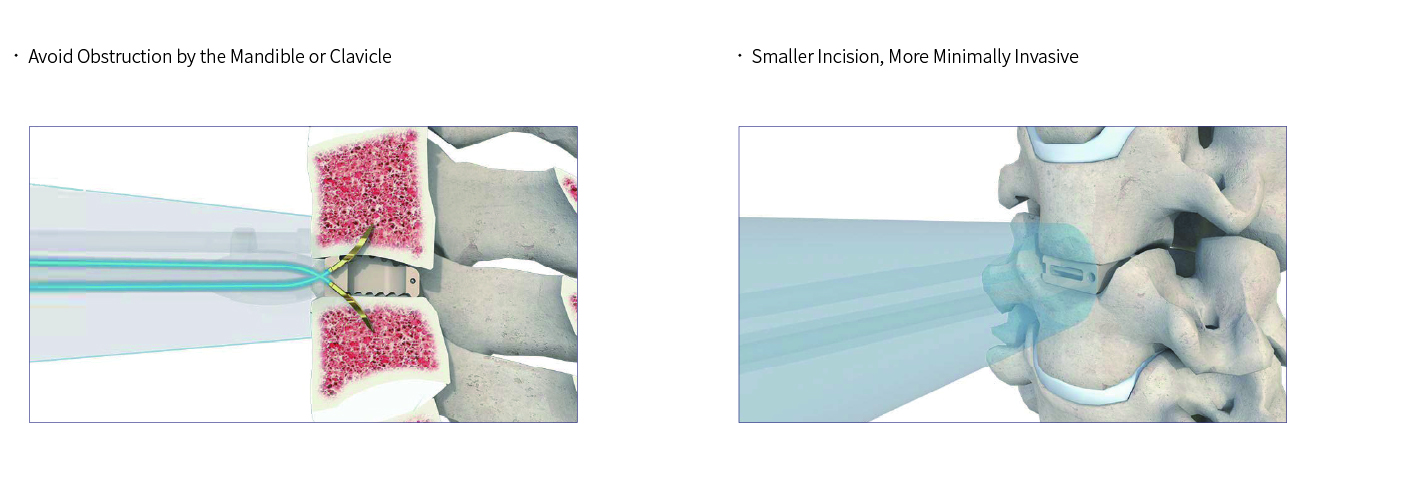
• The implant is positioned entirely within the intervertebral space without an anterior plate or external hardware.
• The intra-discal configuration minimizes anterior implant prominence and may help reduce soft-tissue irritation and postoperative dysphagia.
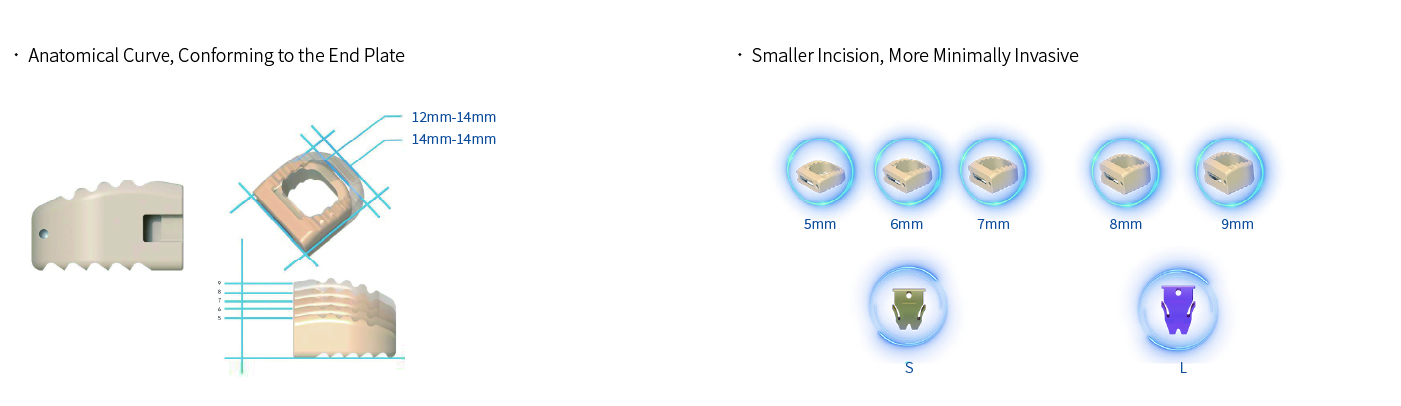
• Serrated, wave-like structures on the superior and inferior surfaces engage the vertebral endplates and help improve initial fixation and resistance to migration.
• Integrated pure tantalum marker pins provide radiopaque reference points for implant positioning.
• The PEEK body remains radiolucent, allowing the implant position and fusion progress to be evaluated through postoperative imaging.
• The PEEK cage has an elastic modulus closer to that of bone, helping reduce stress shielding at the bone-implant interface.
• The material characteristics provide a suitable mechanical environment for bone integration.
• The PEEK and titanium alloy components are designed to withstand sustained mechanical loading during the fusion period.
PEEK Interbody Cage: The cage is manufactured from PEEK (polyetheretherketone), providing radiolucency, biocompatibility, and an elastic modulus closer to bone.
Pure Tantalum Markers: Radiopaque tantalum markers are integrated into the PEEK cage to assist with implant positioning and postoperative imaging evaluation.
Titanium Alloy Anchoring Clips: Two titanium alloy clips secure the cage to the adjacent vertebral endplates and provide the primary fixation mechanism.
Serrated Endplate Surface: Textured structures on the cage surfaces are designed to engage the vertebral endplates and help resist implant migration.
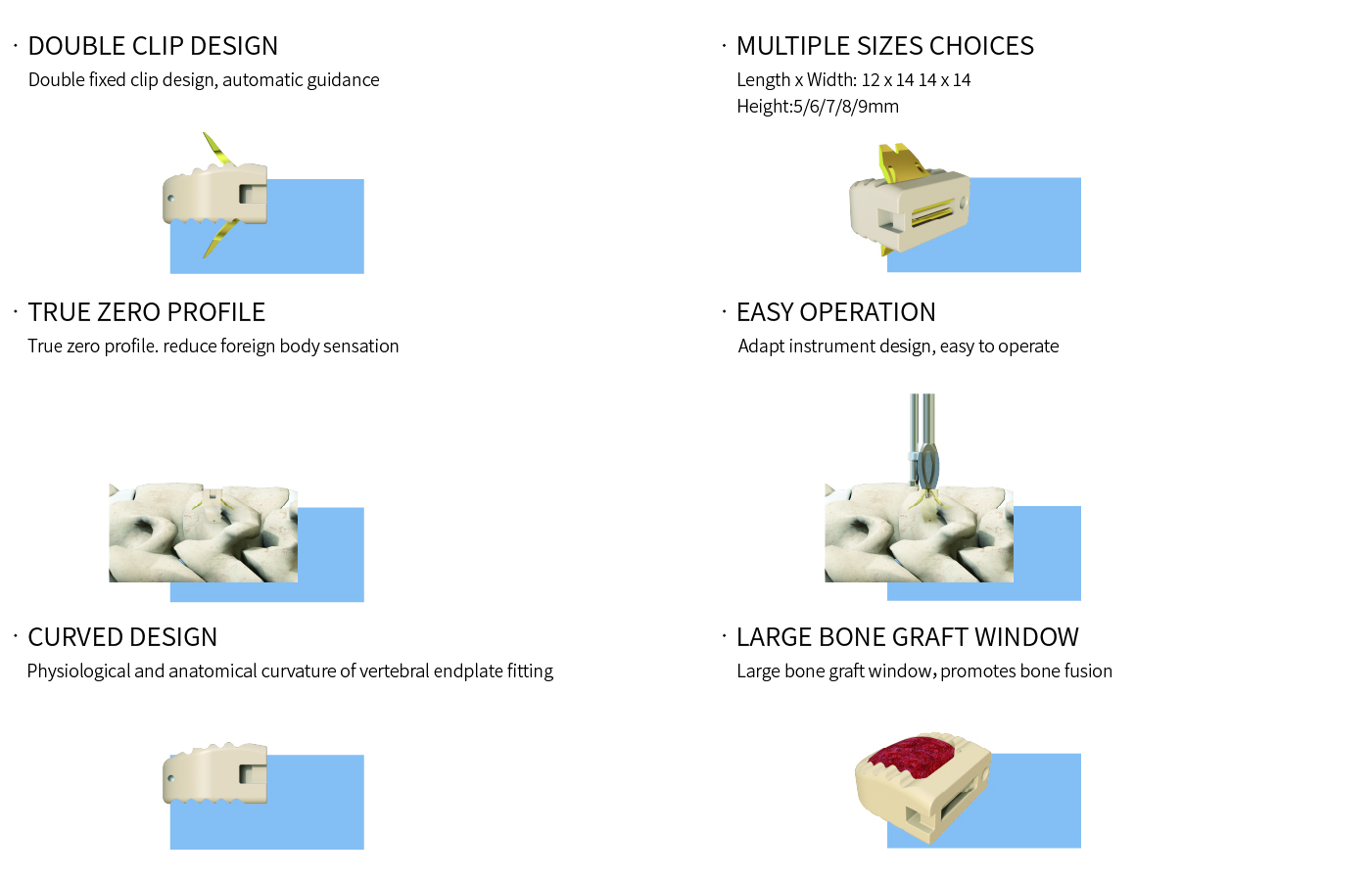
Zero-Profile Configuration: The implant is designed to remain completely within the intervertebral space, eliminating the need for a separate anterior cervical plate.
The Cervical Fusion Cage (Insert-Type) combines a radiolucent PEEK cage, integrated tantalum markers, and self-locking titanium alloy clips in a stand-alone zero-profile configuration.
Its internal graft chamber, textured endplate interface, and clip-based fixation are designed to provide initial mechanical stability while supporting restoration of disc height and the cervical fusion process. Multiple implant sizes provide flexibility for different anatomical requirements and surgical applications.
The Cervical Fusion Cage (Insert-Type) is intended for anterior cervical interbody fusion (ACDF) in skeletally mature patients.
It is indicated for the treatment of cervical degenerative disc disease and related conditions, including:
• Cervical Degenerative Disc Disease
• Cervical Disc Herniation
• Cervical Spondylosis
• Other Similar Cervical Degenerative Pathologies
The system is intended for use at one or more contiguous cervical levels from C2 to C7, providing segmental stabilization and supporting restoration of disc height during the fusion process.